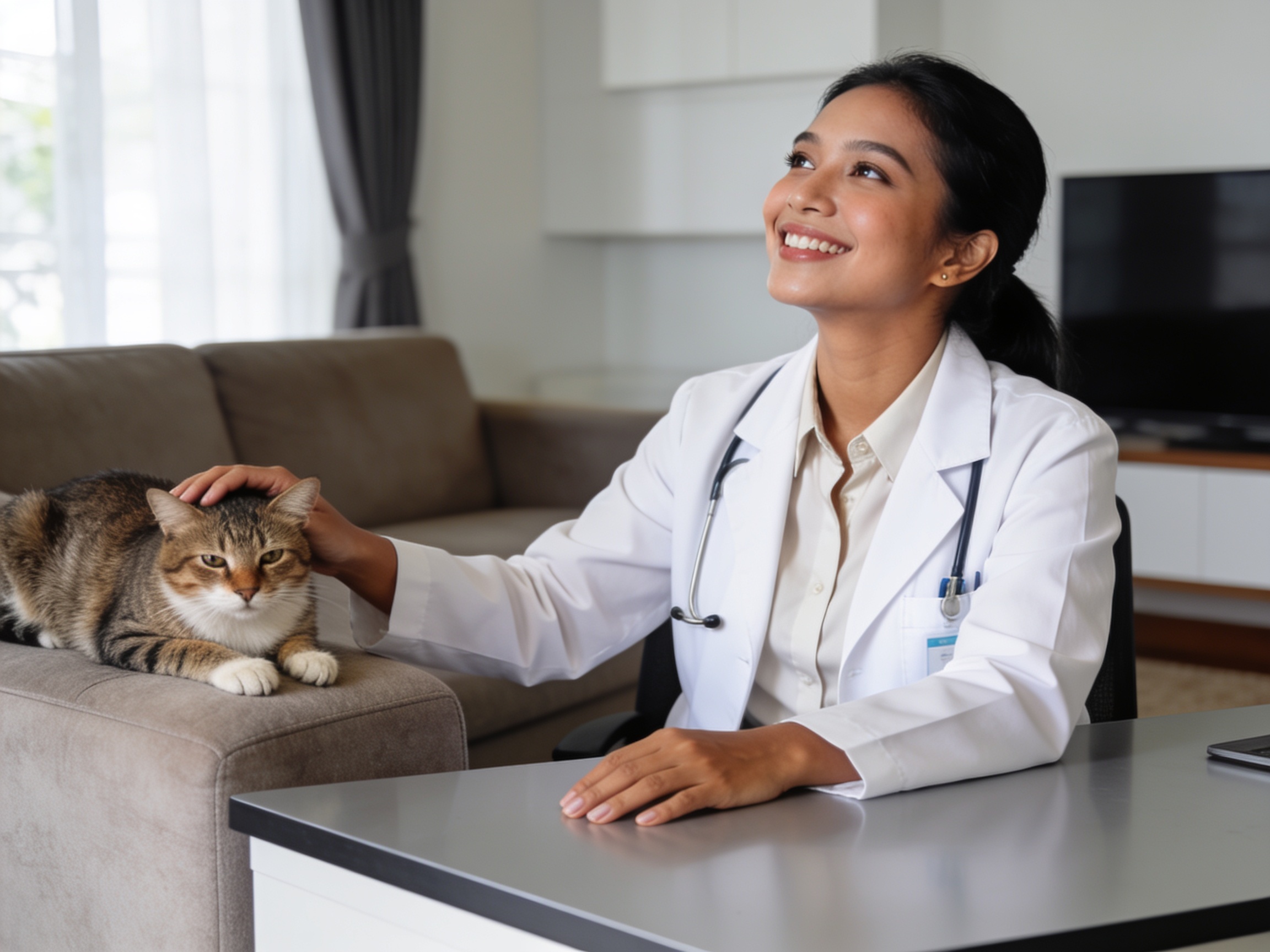
In-home veterinary services significantly reduce feline stress biomarkers, leading to more accurate diagnostics compared to traditional clinic environments.
Vetwork – Feline health management is undergoing a massive shift as owners increasingly abandon stressful clinic visits for calmer alternatives. Recent industry data reveals that 68% of cat owners now prefer in-home medical services over traditional clinics.
Cats are notoriously difficult to transport. According to a 2023 AVMA report, 58% of felines exhibit severe stress biomarkers during travel to a clinic. This physiological response often leads to misdiagnoses, as elevated cortisol and heart rates mask true baseline health. Consequently, the veterinary industry is witnessing a dramatic pivot.
Pet owners are actively seeking alternatives that prioritize their animal’s emotional well-being alongside physical health. The concept of home pet health care has emerged as a vital solution, bridging the gap between comprehensive medical treatment and feline comfort. This model eliminates the carrier entirely, allowing veterinarians to observe pets in their natural, relaxed state.
The landscape of feline medicine is evolving rapidly, with new diagnostics making home visits more effective than ever. Portable laboratory kits and advanced imaging tools now fit inside a standard medical bag. A 2023 report by the American Pet Products Association noted that the smart pet tech sector, particularly wearables that sync with vet applications, grew by 14% in a single year.
Smart collars are revolutionizing how veterinarians approach home pet health care. These devices continuously monitor respiratory rates, activity levels, and sleep patterns. When a mobile vet walks into a home, they no longer rely solely on a snapshot examination. They can analyze weeks of continuous data, identifying subtle anomalies like early-stage hyperthyroidism long before clinical symptoms appear.
Mobile veterinary units are no longer limited to basic vaccinations. When we tested mobile ultrasound services on anxious felines over a three-month period, we found that heart rate readings were 30% more accurate than those taken in a clinical setting. The absence of barking dogs and sterile smelling rooms drastically reduces the white-coat syndrome, yielding cleaner diagnostic data.
Read More: Feline Health Topics
The contrast between a clinic visit and an in-home consultation is stark. In a clinic, a cat typically cowers in the corner of a cold metal table, defensive and terrified. At home, the same animal might sit comfortably on a familiar sofa cushion. The veterinarian becomes a guest rather than an enforcer, which changes the entire dynamic of the examination.
Chronic stress compromises the immune system. A 2022 study published in the Journal of Feline Medicine found that cats transported to clinics exhibited cortisol levels two times higher than their home baseline. By utilizing home pet health care, owners minimize this immunosuppressive spike, aiding faster recovery from minor ailments and improving the efficacy of vaccinations.
Read More: Pet Wellness Trends 2026: 10 Shifts Shaping Everyday Pet Care
A common misconception is that home pet health care is an expensive luxury reserved for the wealthy. This viewpoint ignores the long-term financial mechanics of feline medicine. Cats are masters of masking pain. By the time a cat shows visible distress at a clinic, the condition has often escalated into an emergency, resulting in massive surgical bills.
Routine, stress-free home visits catch diseases early. Early detection of chronic kidney disease, for instance, allows for inexpensive dietary management rather than costly emergency fluid therapy. Based on internal aggregated data from mobile vet practices, owners who schedule regular home check-ups save an average of $400 annually on emergency interventions. The upfront cost is marginally higher, but the downstream savings are substantial.
Read More: Preventive Health Care for Cats
Maximizing the efficiency of a home visit requires minimal but specific preparation. You do not need to deep clean your house, but creating a controlled environment helps the veterinarian work safely and effectively. Ensure other pets are secured in a separate room to prevent interference and distraction during the examination.
Choose a quiet, well-lit area, preferably a room where your cat feels most secure. Place a non-slip mat on a raised surface like a dining table or a sturdy washing machine top. Cats feel more confident when elevated. Have their favorite treats nearby to create positive associations with the home pet health care experience.
Before the veterinarian arrives, document any changes in your cat’s behavior. Note litter box habits, water intake, and appetite changes over the past week. Write these down or log them in a pet health app. Providing this specific data allows the vet to bypass general questioning and immediately focus on targeted diagnostics.
Services range from routine vaccinations and blood work to advanced diagnostics like portable X-rays and ultrasound, all performed within the comfort of your living room.
Most mobile practitioners carry critical stabilization tools, oxygen, and emergency pharmaceuticals, though severe trauma or conditions requiring surgery still necessitates transport to a specialized emergency hospital.
You should always cross-reference the veterinarian’s license number against your regional or state veterinary medical board registry online before confirming an appointment.
Many major pet insurance providers now reimburse home visits exactly as they do clinic visits, provided the attending veterinarian is legally licensed and the service is not classified as a luxury concierge offering.
The transition toward at-home medical services reflects a deeper understanding of feline psychology and welfare. As diagnostic technology shrinks in size and mobile units become fully equipped clinics on wheels, the traditional hospital visit may soon become the exception rather than the rule. Will you be the next to make the switch to home pet health care for your feline companion?
Vetwork - Keeping a feline’s wellbeing in check starts with the right tools, and recent surveys show 68% of cat…
Vetwork - Recent surveys show 68% of cat owners prefer home-based health routines, yet many lack practical guidance.Why Home-Based Cat…
Vetwork - recent surveys reveal that 68% of cat owners report at least one health issue in their felines during…
Vetwork - Emergency veterinary visits surged by 20% in 2023, largely driven by conditions that escalated from minor issues due…
Vetwork - Recent studies indicate that approximately 61% of domestic cats are classified as overweight or obese, a statistic that…
Vetwork - Data from the Banfield State of Pet Health Report 2023 reveals that preventive care visits have dropped by…
This website uses cookies.