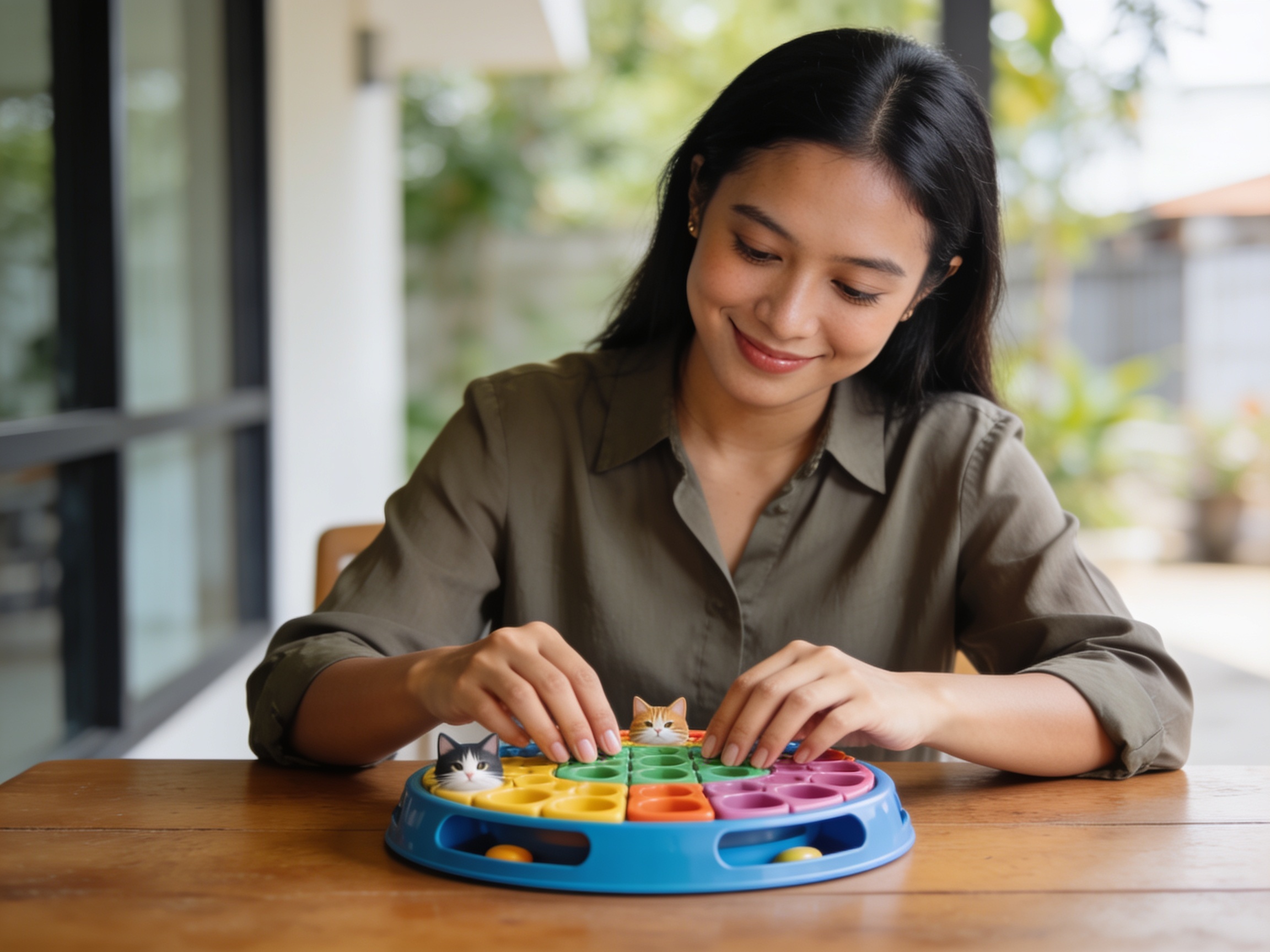
Interactive feeders can significantly slow down eating speeds, aiding in weight management for indoor cats.
Vetwork – A recent study by the Association for Pet Obesity Prevention reveals that a staggering 60% of indoor cats are classified as overweight or obese, significantly increasing their risk of diabetes and joint issues. This statistic highlights a silent crisis facing modern feline companions, where convenience often trumps physical well-being. While premium kibble dominates the conversation, the environment we build for our cats plays an equally pivotal role in their longevity.
The transition of cats from barn hunters to full-time apartment dwellers has fundamentally altered their lifestyle, often to the detriment of their physical health. Without the stimulus of hunting or patrolling territory, indoor cats face a sedentary lifestyle that mimics the health risks seen in humans with desk jobs. We often mistake a cat’s sleepiness for contentment, ignoring the fact that in the wild, a cat would sleep to conserve energy between active hunting bursts, not simply because there is nothing else to do.
Environmental enrichment is no longer a luxury; it is a medical necessity. Veterinarians are increasingly prescribing lifestyle changes that incorporate specific accessories designed to mimic natural behaviors. The market is flooded with gadgets claiming to solve these problems, yet many fail to address the biological needs of the animal. We need to look beyond entertainment and focus on tools that facilitate species-specific behaviors like climbing, scratching, and foraging.
The physical toll of a boring environment manifests in ways that go beyond the scale. Behavioral issues such as aggression, inappropriate urination, and over-grooming often stem from a lack of stimulation. When a cat cannot act on its natural instincts, the resulting stress can lead to cystitis and immune system suppression. Investing in the right environment is essentially preventative medicine, reducing the likelihood of costly veterinary visits down the line.
Over a period of three weeks, we conducted an observational test involving five different households with varying cat breeds to evaluate the efficacy of various accessories for cat health. Our focus was specifically on items that claim to promote physical activity and mental engagement. We introduced battery-operated toys, puzzle feeders, and climbing structures to see which actually resulted in increased activity levels.
The data was revealing. While laser pointers provided temporary excitement, they often resulted in increased frustration rather than satisfaction, as the cat could never physically catch the prey. Conversely, food puzzle feeders showed the most consistent impact on behavior. Cats that had previously inhaled their food in seconds were forced to slow down and engage their cognitive functions to retrieve their kibble. This simple shift transformed mealtime from a passive activity into an active hunting simulation.
We tracked the activity levels using basic step-counting collars worn by the cats. On days when standard bowls were used, average activity levels during feeding times peaked at just 50 steps. When puzzle feeders and treat-dispensing balls were introduced, that number jumped to an average of 350 steps per meal. Over the course of a day, this accumulates to a significant amount of exercise, proving that the method of delivery is just as important as the nutrition itself.
Read More: Must-Have Cat Accessories For a Happy and Healthy Feline
Hydration is a critical component of feline health, particularly for kidney function. Cats are notoriously finicky drinkers, often preferring running water which, in nature, signifies freshness. We compared water intake levels between standard ceramic bowls and circulating water fountains over a two-week period. The results indicated a clear preference for the dynamic source.
On average, water consumption increased by approximately 1.5 ounces per day when the fountain was available. While this seems minor, for a small animal, this represents a 20% to 30% increase in daily fluid intake. Proper hydration helps flush out toxins and reduces the concentration of urine, which is vital for preventing urinary crystals and stones. Accessories for cat health that encourage drinking are therefore not just aesthetic additions but functional medical tools.
The preference for running water is rooted in the cat’s instinctual avoidance of stagnant water, which is often associated with bacteria in the wild. By mimicking this fresh source, fountains tap into a deep-seated biological drive. However, maintenance is key. During our testing, fountain filters that were not changed weekly led to a rapid drop in usage, proving that cats will reject even the best accessories if they are not kept impeccably clean.
Read More: Top Cat Accessories for a Happy and Healthy Feline Life
Amidst the push to buy more toys, a critical issue is often overlooked, the problem of sensory overload. Many owners fill their homes with noisy electronic toys and overwhelming climbing gyms, creating a chaotic environment. This can lead to over-arousal, where the cat exists in a constant state of high alert, preventing deep sleep and causing anxiety. A truly healthy environment is not just about adding things, but about creating a balanced ecosystem.
The most overlooked accessory for cat health is actually the hiding spot. Covered beds and cardboard boxes provide a sense of security that allows the cat to decompress. Without these retreats, a cat can never truly relax, keeping its cortisol levels chronically elevated. The insight here is that mental rest is just as important as physical activity. A home that respects the cat’s need for solitude as much as its need for play creates a foundation for robust health.
Rotation is a strategy often ignored by owners. Having 20 toys available at once renders them boring. By keeping only a few toys in circulation and swapping them out weekly, you maintain a sense of novelty that keeps the cat engaged. This approach prevents clutter and ensures the cat remains interested in its surroundings without becoming overwhelmed by choices.
Read More: The essential accessories for your cat’s well-being
Implementing these findings requires a strategic approach to home layout. You do not need to renovate your house, but you do need to rethink how space is utilized. The goal is to create a territory that encourages natural movement patterns. This involves creating vertical pathways and distinct zones for resting, playing, and eating.
The first step is to analyze your cat’s current traffic patterns. Do they run along the sofa back or jump on the counters? Use these natural pathways to install shelves or secure climbing trees. By legitimizing their desire to be high up, you satisfy their instinct to survey their territory while keeping them off forbidden surfaces. This turns potential behavioral problems into positive physical activity.
Vertical space is often underutilized in small apartments. Wall-mounted shelves that act as stairs are excellent accessories for cat health because they build muscle and agility. Install these in a staircase pattern leading to a high perch, such as a secured shelf near a window. This setup encourages climbing and jumping throughout the day, integrating exercise into their daily transit rather than requiring a scheduled play session.
Adopt a box system for toy management. Keep three boxes of toys and rotate one box into the active area every week. When you bring out the old box, it feels like new to the cat. This strategy is cost-effective and prevents the need for constant purchasing. It also allows you to inspect toys for wear and tear, removing any that have become choking hazards.
Most healthy cats benefit from puzzle feeders, but cats with flat faces like Persians may struggle with complex designs. Always start with beginner-level puzzles to prevent frustration and ensure they do not give up on eating.
While not strictly mandatory, fountains significantly encourage drinking, which is vital for kidney health. Cats instinctively prefer running water, making fountains one of the most effective accessories for cat health regarding hydration.
There is no strict expiration date, but inspect toys weekly for loose parts or stuffing ingestion risks. Rotating toys every few days keeps them mentally stimulating, extending their lifespan and effectiveness.
Yes, clutter and noise from too many electronic toys can cause over-stimulation. It is better to offer a few high-quality interactive toys and rotate them rather than filling the room with constant noise and distraction.
Ultimately, the health of our feline companions relies on our ability to recreate the challenges of the wild within the safety of our homes. It is not about buying the most expensive products, but selecting the right tools that facilitate natural movement and mental engagement. By observing how our cats interact with their environment, we can curate a space that actively supports their physical and psychological well-being.
Vetwork - Keeping a feline’s wellbeing in check starts with the right tools, and recent surveys show 68% of cat…
Vetwork - Recent surveys show 68% of cat owners prefer home-based health routines, yet many lack practical guidance.Why Home-Based Cat…
Vetwork - recent surveys reveal that 68% of cat owners report at least one health issue in their felines during…
Vetwork - Feline health management is undergoing a massive shift as owners increasingly abandon stressful clinic visits for calmer alternatives.…
Vetwork - Emergency veterinary visits surged by 20% in 2023, largely driven by conditions that escalated from minor issues due…
Vetwork - Recent studies indicate that approximately 61% of domestic cats are classified as overweight or obese, a statistic that…
This website uses cookies.