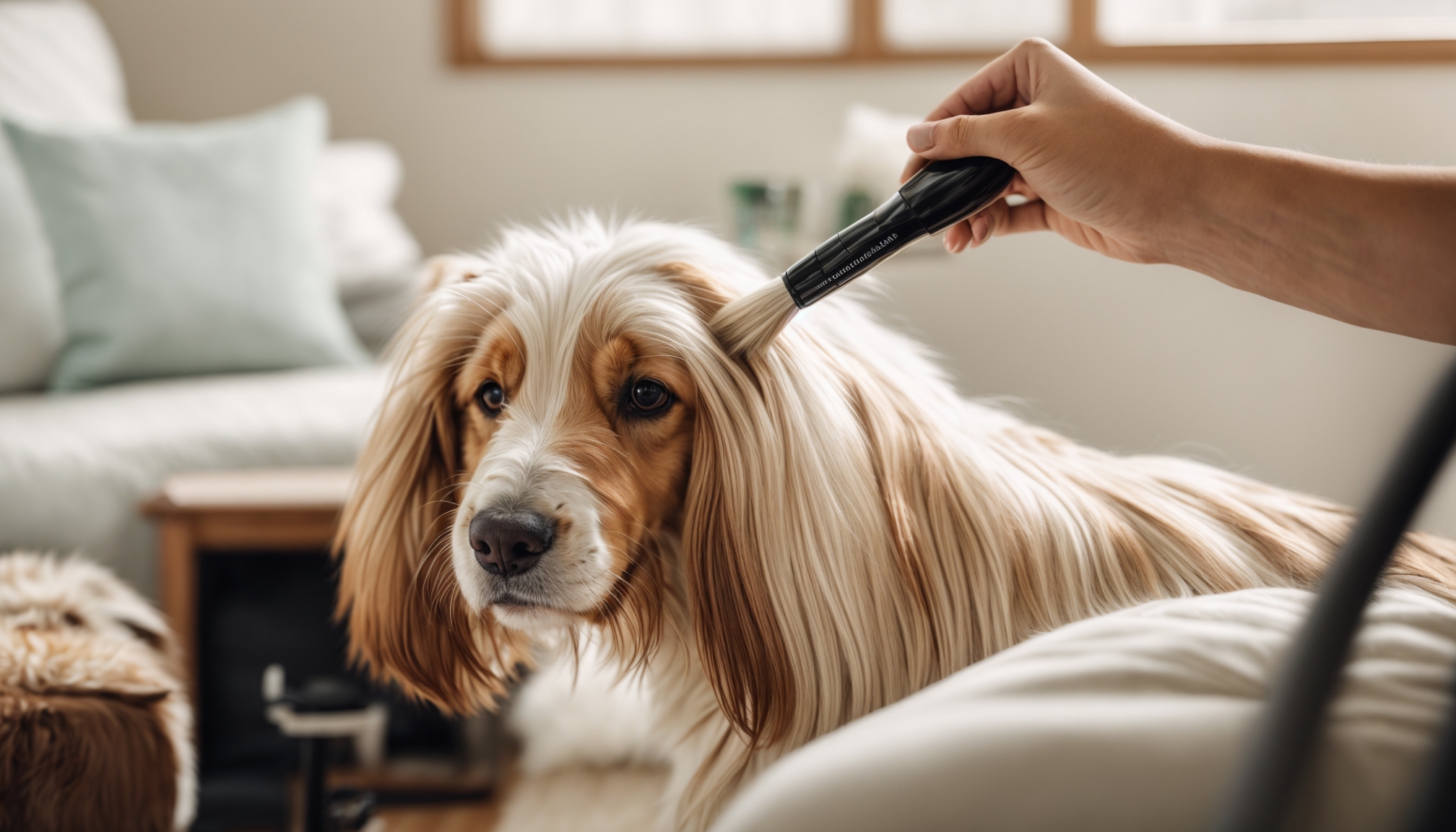
vetwork – brushing long haired dogs requires patience and the right tools to maintain their coat’s health and prevent tangles or matting. Proper grooming routines significantly improve your dog’s comfort and appearance.
Selecting appropriate brushes and combs is essential when brushing long haired dogs. Slicker brushes help remove loose hair and prevent mats, while wide-toothed combs make detangling easier without causing pain. Additionally, a pin brush is perfect for maintaining a smooth coat on many long-haired breeds.
Start by detangling the worst mats with your fingers or a detangling spray before using any brush. Next, brush in the direction of hair growth to avoid discomfort. Work gently from the roots to the tips, focusing on areas prone to matting such as behind the ears, under the legs, and around the collar. Maintaining a consistent brushing schedule prevents severe tangles and keeps the coat healthy.
Regular brushing long haired dogs does more than improve appearance; it promotes healthy skin by distributing natural oils. It also reduces shedding and helps monitor your pet’s health by detecting parasites, wounds, or allergies early. Engaging in grooming sessions strengthens the bond between you and your dog, making future brushing easier and more enjoyable.
Read More: Grooming Tips for Long-Haired Dog Breeds
Many owners struggle with brushing long haired dogs due to discomfort or resistance from the pet. To ease the process, use treats and take breaks during grooming sessions. If your dog regularly develops severe mats, consult a professional groomer. Patience and a calm environment will help your dog associate brushing long haired dogs with positive experiences.
Incorporating brushing long haired dogs into your pet care routine is crucial for a shiny, mat-free coat. The practice supports overall cleanliness and prevents skin problems caused by dirt and accumulated debris. By mastering these best practices, you contribute to your dog’s overall well-being and happiness.
This website uses cookies.